Why Workplace Personal Style Feels Confusing for Employees . . . and Risky for Companies

As personal stylists working with companies and professionals since 2010, we’ve learned a lot about authenticity, dress levels, and how style actually operates at work.
Let’s talk about some of the most well-intentioned—and quietly confusing—ideas in modern work culture as they relate to getting dressed for work.
Now, to be fair, we’re BU Style. Be You is literally the point. But we’re also hoping the version of “you” that shows up understands context, is thoughtful about what their style communicates, and recognizes that getting dressed for work doesn’t happen in a vacuum.
Which brings us to two phrases that show up everywhere:
“Be yourself” or “Dress for your day.”
Both are meant to signal trust, flexibility, and individuality. And on paper, they sound empowering. But when phrases like these stand in for actual dress guidance, they often create more confusion than clarity—especially when it comes to navigating expectations at work.
Without shared language around dress levels or expectations, people are left translating vague ideals into daily outfit decisions, or not translating them at all. Some are trying to decode what “appropriate” means in practice, while others are dressing purely from personal preference because no framework has been offered.
And when that happens, style at work stops being intentional and starts being inconsistent.
People aren’t sure what’s expected.
They watch what others are wearing instead of understanding the environment. They either overthink every choice—or opt out of the question entirely. That’s not a personal style problem. It’s a clarity problem.
Because style at work isn’t just self-expression. It’s communication.
Why Workplace Flexibility Without Dress Code Guidance Creates Stress, Not Freedom
Here’s the reality many workplaces don’t say out loud. When formal dress codes disappear, judgment doesn’t. It just becomes invisible.
Without shared language or examples, people don’t dress with confidence—they dress defensively. They hedge. They guess. They try not to get it “wrong.” It’s the professional equivalent of getting dressed in the dark.
What emerges isn’t clarity or shared understanding. It’s a mix of personal expression and coping strategies—applied inconsistently, without clear expectations or support.

What Actually Happens Without Dress Code Guardrails at Work
In the absence of clarity around dress code, employees tend to fall into one of these situations:
Over-cautious dressing: Playing it safe, blending in, shrinking to avoid scrutiny—even when that means under-representing their voice, leadership, or expertise.
Over-casual dressing: Falling within policy because there is no policy, yet misaligned with the setting, the room, or the responsibility of the moment. Because nothing is technically “wrong,” feedback rarely happens directly. Instead, impressions form quietly—through side conversations, client discomfort, or unspoken assumptions that later affect visibility or advancement without ever being named.
Copying the loudest example in the room: Mimicking senior leaders, culture carriers, or personality outliers instead of making intentional choices.
Constant guessing: Spending unnecessary mental energy asking, “Is this okay?” instead of focusing on the work itself.
None of this is a style issue. It’s a language issue.
Dress Level Is Part of the Issue, and That’s Where the Confusion Starts
One of the biggest misunderstandings about authenticity at work is the assumption that being authentic means dressing the same way across every setting.
That’s simply not how workplaces—or human perception—work.
Casual, smart casual, business casual, and business formal aren’t value judgments. They’re different levels of signal. Each one communicates something distinct about expectations, context, and the role someone is stepping into in a given moment.
This confusion is compounded by the fact that not everyone understands style language—or has ever been taught to. Fashion and style are not the same thing. Style is a form of communication, and like any language, it has to be learned. Many people have never been given the vocabulary, examples, or mentorship to understand how clothing functions strategically in a work environment.
“Fashion and style are not the same thing. Style is a form of communication, and like any language, it has to be learned.”
– Natalie, BU Style
That gap widened dramatically during COVID and the shift to remote work. Entire groups of professionals missed out on the observational learning that once happened organically at work—watching how leaders dressed for client meetings, noticing how presentation shifted across environments, or receiving quiet guidance along the way. Without that exposure, people were left to interpret expectations on their own.
The issue isn’t that dress levels exist—they do. The issue is the sharp shift from rigid dress codes to no dress code at all, without replacing rules with education. Dress levels are rarely named or explained, and when they are addressed, they’re often framed as strict, arbitrary rules rather than inclusive guidelines that help employees understand how to show up across different situations. The result is unspoken uncertainty and misalignment—an ambient, low-grade chaos that quietly adds mental weight and clouds focus, performance, and productivity.
Over time, that uncertainty can turn into resentment. People may feel quietly judged, constrained, or unsure where they stand, and that discomfort can bleed into other areas of their work. Others swing in the opposite direction, becoming so cautious with their style that it stops serving them altogether.
In both cases, style becomes something to manage or avoid, rather than a strategic tool to build trust, create connection, reinforce credibility, or close deals.
Without shared language or guidance, people internalize the wrong conclusion: that being asked to adjust how they dress is a request to erase who they are.
In reality, authenticity doesn’t disappear across settings—it gets translated.
Where Our Style Personalities and Personal Style Fit Into the Workplace
Style personalities represent authentic expression. They describe your natural visual language—your preferences, energy, and tendencies.
They are not dress levels.
Dress level is context. Style personalities are the identities that make up your overall style brand.
Understanding this distinction is where clarity begins. Everyone has a range within their style personalities, with certain nuances or elements naturally stronger than others—much like our real-life personalities. Together, these elements shape how your style shows up.
Different environments don’t require you to change who you are. They simply ask for different nuances or elements of your style personalities to take the lead.
When people understand this range, they can adjust the volume of their expression across settings—communicating who they are without losing themselves in the process.

What Dressing Authentically and Honoring Appropriate Dress Levels Looks Like in Practice
This is where the power of AND comes in.
You can still express a Relaxed style personality in a business-formal environment—through the colors you choose, prioritizing comfort within suiting through stretch suiting fabrics, or easy-moving loafers instead of pumps.
Let’s say you’re also highly Magnetic and working to close a deal, that same outfit can incorporate stronger lines, higher contrast, or sharper proportions to project clarity and authority.
This isn’t about choosing between authenticity or appropriateness. We’re playing in the ANDs of your style brand: still you and aligned with the dress level. You can showcase that you are expressive and credible. Comfortable and powerful.
That’s how style becomes a tool, not a liability. That’s the difference between suppression and intention. And this is where BU Style’s philosophy really comes into play.
Yes, we believe in Be You. But we also believe in being thoughtful about how you show up, and how that expression lands in different spaces. I often explain this with a food analogy.
If I’m hosting a dinner and I know someone doesn’t like mushrooms or is allergic to shellfish, I’m not going to build the entire menu around that ingredient and insist, “But this is my authentic cooking!”
Instead, I create a spread that offers a range of things I enjoy that also respect everyone at the table. There’s room for personal taste. There’s respect for the people at the table. And there are choices. You can eat more or less of what you love most, but you’re still participating in a shared experience.
Style works the same way: Your style brand is your taste palette. Your dress level is the menu for the setting.
Being authentic doesn’t mean ignoring the table you’re sitting at. It means finding a thoughtful middle ground where you are still clearly present, and the context is honored.
That’s not dilution. That’s discernment.
✨ Read more about style personalities: Learn about the BU Style Six™ style personalities in our comprehensive insights article.
What Goes Wrong When Clear Dress Guidelines Are Ignored? Here’s a Real-World Example:
I once had a style consultation with a company that genuinely wanted to empower employees and support individuality. They proudly shared that they had adopted a “Dress for Your Day” approach stating they wanted employees to feel empowered and like they can be authentic.
A few minutes later, they shared something else.
There was a young woman on their team—smart, capable, doing excellent work. She dressed in bold colors. She had purple hair. She showed up creatively and confidently as herself.
Then came the question: “She’s wonderful, but how do we tell her she’s not going to advance into bigger, client-facing roles?”
When I asked what guidance had been given to her, the answer was just that: “Dress for Your Day.”
No conversation about expectations.
No language for balancing her Creative with Polish.
No framework for translating personal style across environments.
They didn’t want to limit self-expression, but they also didn’t want to provide language that could help her adapt without self-erasure.
So instead of coaching, there was silence. Instead of clarity, there was a ceiling she couldn’t see.
The issue wasn’t her creativity or authenticity; it was the absence of shared expectations and education around messaging and alignment.

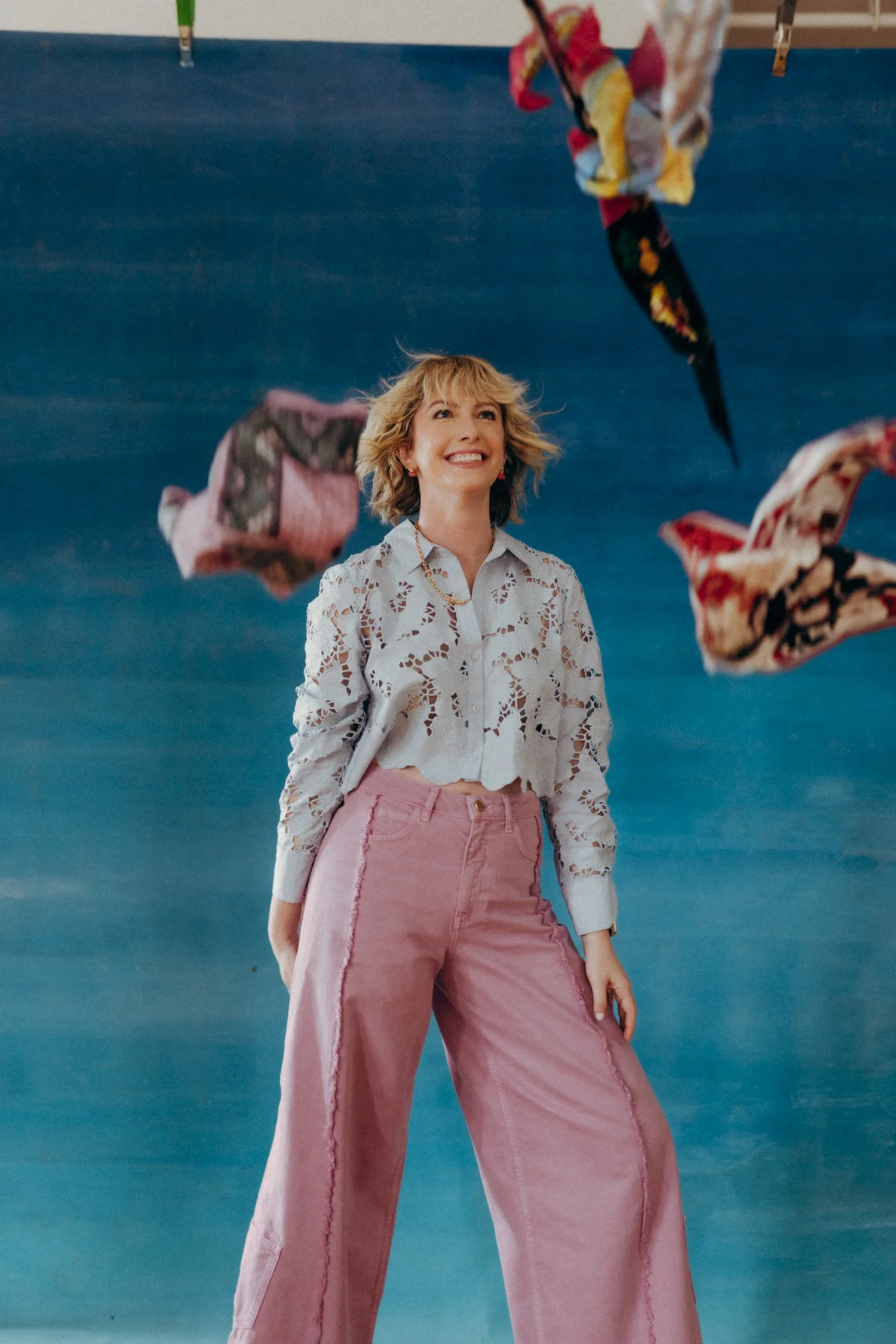
Not our actual client / company but an example of aligning a Relaxed + Creative style in a smart casual workplace.
What Dressing With Intention Actually Means at Work
Dressing with intention doesn’t require rigid rules. It requires knowing what level you need to be ready for—even when the day changes.

At work, most days include more than one context. An internal meeting. A client call. A presentation you planned for—and one you didn’t. Intention starts with identifying the most visible or consequential moment of your day and setting a personal baseline that allows you to step into something unexpected with confidence and clarity.
In other words: What’s the lowest dress level at which you still feel appropriate, aligned, and effective if you were called into an unplanned meeting or conversation? That’s your daily anchor.
From there, you build two lanes in your wardrobe:
High-impact looks for moments that require authority, visibility, or influence
Everyday looks that are still intentional enough to hold their own if the room changes
Responsibility—not title—drives these choices. A high-stakes conversation asks for clearer visual signals than a low-risk one. Client-facing moments carry different expectations than internal work. Dressing with intention means preparing for the highest reasonable expectation of your role that day, not the lowest bar you can clear.
Intention also means editing. Rather than letting every style personality compete at once, you decide which elements lead and which support—so your message is focused, not scattered.
This is also where layers and adaptability come in. Something as simple as keeping a great blazer over the back of your chair can instantly elevate a smart-casual look when the room changes—without requiring a full outfit swap or a loss of personal style.
Intentional dressing builds flexibility into outfits. A layer you can add for authority. A shoe choice that shifts the tone. Proportions or colors that subtly change how a look reads while staying true to you.
The guiding question becomes simple:
If I’m called into something right now, will I feel right in the room?
When the answer is yes, style stops being something you manage—and starts being something that works for you.
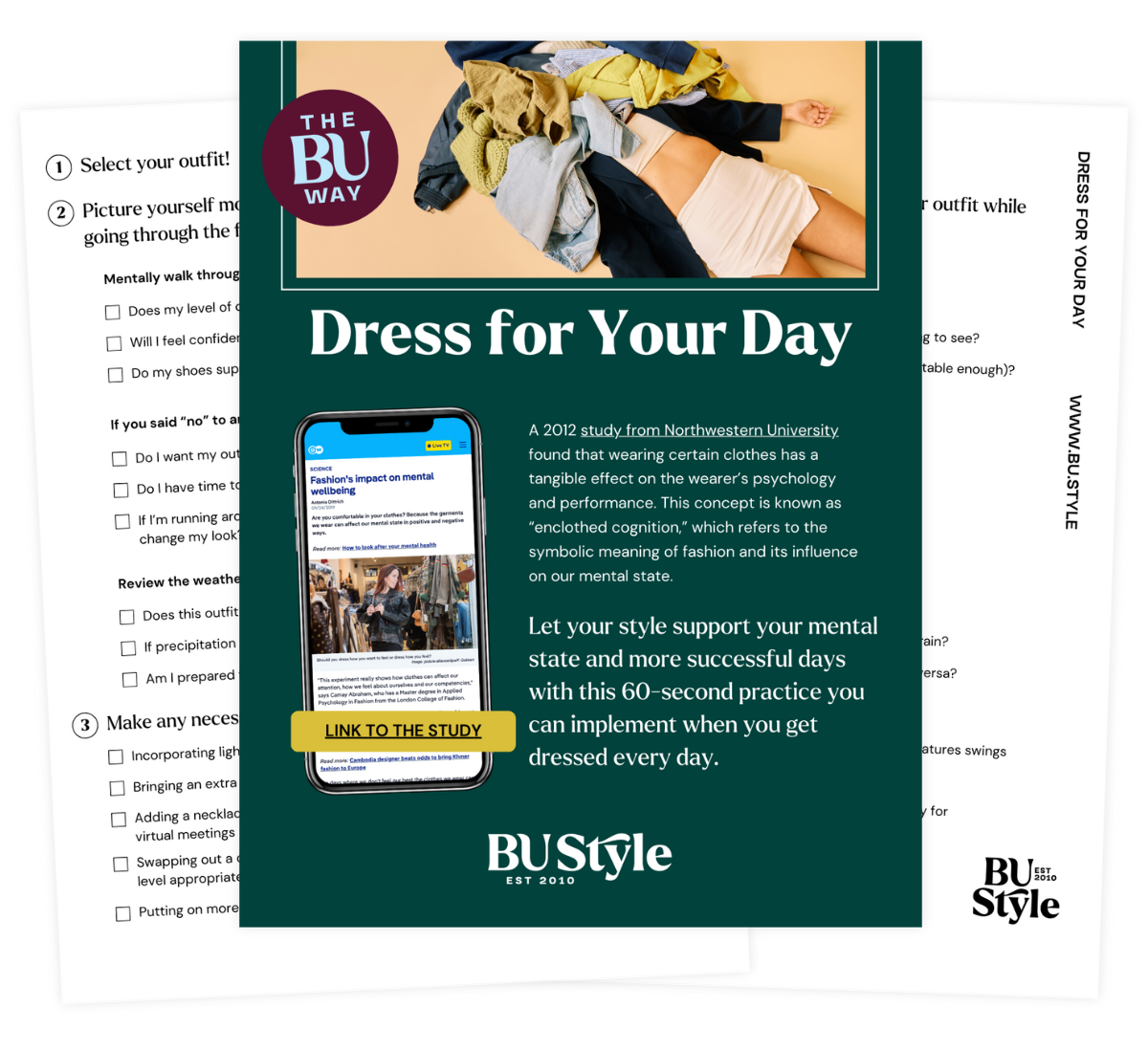
✨ Get our free Dress for Your Day Guide
If you want help applying this thinking day to day, our Dress for Your Day guide offers practical decision-making tools to help you navigate different environments without losing yourself.
Why Dress Guidelines and Education Matter for Companies
When companies remove dress codes without replacing them with education or shared language, judgment doesn’t disappear, it goes underground.
Without clear guidance, expectations still exist. They’re just communicated informally, inconsistently, and often inequitably. People are evaluated without knowing the criteria. Feedback becomes indirect or nonexistent. Advancement decisions feel opaque rather than earned.
Clear frameworks reduce guesswork. They support fairness and transparency. They replace whisper networks with actual communication. And they allow individuality and alignment to coexist—rather than forcing people to choose between self-expression and success.
This isn’t about control. It’s about clarity. When employees understand how dress levels and style expression work together, they’re freed up to focus on the work itself, not the second-guessing around it.
As Personal Stylists, We Understand How to Bridge the Style Gap at Work
Style at work isn’t about dressing one way everywhere. It’s about understanding how identity and context work together.
Style personalities share who you are.
Dress levels reflect where you are.
When people are given language to translate between the two, getting dressed stops feeling risky and starts feeling intentional, empowering—and maybe FUN!
And that’s better for individuals, workplaces, and culture as a whole.
Get More Personal Stylist Support
If this article sparked a few “oh wow, that’s exactly it” moments, there are a couple of ways to keep going, whether you’re navigating this personally or thinking about how style shows up across your organization.
For Individuals
If you want help understanding your style personalities and applying this work day to day, you can start by taking our assessment and accessing our guides through our paid online membership BU Style Circle. It’s designed to help you build clarity, readiness, and intention into your wardrobe, so getting dressed supports how you want to show up at work, not distracts from it. If you are in NYC, you can explore our personal style offerings.
For Companies
If you’re interested in creating clearer, more empowering guidance around professional dress—without reverting to rigid dress codes—we’d love to talk. We work with organizations to create shared language, practical frameworks, and inclusive guidance that helps employees align their personal style brand with the organization’s brand. BU Style loves to support companies in moving from confusion to clarity, so style becomes a tool for performance, connection, and credibility.
Contact us to learn more.